


Maintenance & Tips
RC cars in winter – can you drive in sub-zero temperatures, and where?
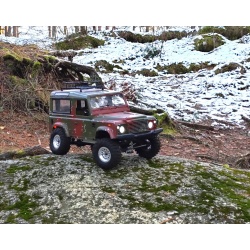
It’s that time of year again when the days are short and it’s freezing cold outside. Does that mean it’s time to put your RC car into hibernation and wait for spring? This question is surely on the minds of many RC fans and is waiting to be answered.
RC cars in winter: what to keep in mind?
While our previous articles have mostly been fact-based, today’s topic is more a matter of preference. There are some aspects to keep in mind when driving outdoors in the cold, but you certainly can’t say that the model should be left indoors when temperatures drop below zero. So what should you keep in mind in sub-zero temperatures? Based on our experience, the following:
- Models are largely made of plastic – this material becomes more brittle in the cold and breaks more easily
- Make sure your drive battery isn’t as cold as the outside temperature when you head out. The battery should be at least 10 degrees warm so it isn’t damaged when put under load.
- If there is snow as well as cold, bear in mind that you’re essentially driving in wet conditions and the model will need maintenance afterwards (see our previous blog post)
- The ground is frozen and hard. If in warmer weather you’re used to the model easily crushing small, soft lumps of soil as it drives over them, on frozen ground the effect is likely to be the opposite, and it’s the model that gets crushed instead
- It’s not just the model that gets cold – you need to stay warm yourself too. Your hands will be especially sensitive to the cold, as the transmitter is uncomfortable to hold with gloves on, and if you do wear gloves, they have to be thin ones, because with thick gloves handling the transmitter becomes practically impossible.
- With a combustion engine model, especially a nitro model, it really is sensible to put it into hibernation, because in the cold the engine can’t maintain the required operating temperature, and in the end you’ll do more damage to your valuable hobby equipment than you’ll get enjoyment out of it.
- If the snow cover is thick, it simply physically prevents driving outdoors.
Is it worth driving outdoors in winter?
So driving outdoors in the cold in winter largely depends on personal preference. Summer and above-zero temperatures are certainly much more modeller-friendly and offer more pleasant conditions, but you definitely don’t need to throw your model in the corner for the winter. One type of model that’s great to drive outdoors in any season and any weather is the crawler (pictured).
Indoor tracks – driving in the warm
But how can you enjoy this great hobby if you don’t like shivering outdoors in the cold and then spending hours cleaning snow, water and mud off your model? Fortunately, there are very good alternatives to driving outdoors in winter. Here in Estonia, too, there are options for spending time driving RC cars indoors in winter. Permanent indoor off-road tracks can currently be found in Saue and Väike-Maarja, and in Tallinn you can head to the Stroomi centre, which has a model car drift track. Our indoor tracks here are carpeted, and you can’t take just any model onto them. The tracks are designed for 1/10 scale buggies, and races for these are also held on the same tracks. However, you can also just drive there casually without having to race. An indoor track model must be clean and must have an electric motor. For the drift track, a 1/10 scale drift model is suitable.
So if you feel it’s got a bit too wintry outside for you, there are definitely options to keep your hand in. Driving on a track is also a bit different from just bashing around in an open area outdoors – it’s definitely worth a try.
Alternative: plastic scale models
But if indoor tracks are too far away for you and wintry conditions aren’t your thing, but you’d still like to tinker with models indoors in winter, you could dive into the world of plastic scale models instead. These are models that depict real vehicles. It’s a little different from RC models, but also very interesting and rewarding, both in terms of hands-on skills and in learning about history through the model you build.
