


Beginners
RC crawler – a rock climbing model or a scale off-roader?

Today the RC crawler type of model is quite popular and the selection is very large. Models of this type come in every possible scale, from tiny ones all the way up to 1/6 scale. Typically, though, it’s a 1/10 scale model, but the so-called micro scales, from 1/24 (Axial SCX24)…1/18 (Traxxas TRX-4M), have also become very widespread.
The history of the RC crawler
The crawler actually isn’t a model type with a very long history. How and when did this interesting class of models catch the attention of manufacturers?
In its original form, a crawler was a model put together from axles borrowed from other models, with a self-built frame added on. Tamiya Clod Buster axles, with the motor mounted directly on the axle, were widely used. The aim was to build a model that would be as capable as possible at climbing rocks and overcoming obstacles, while speed was secondary.
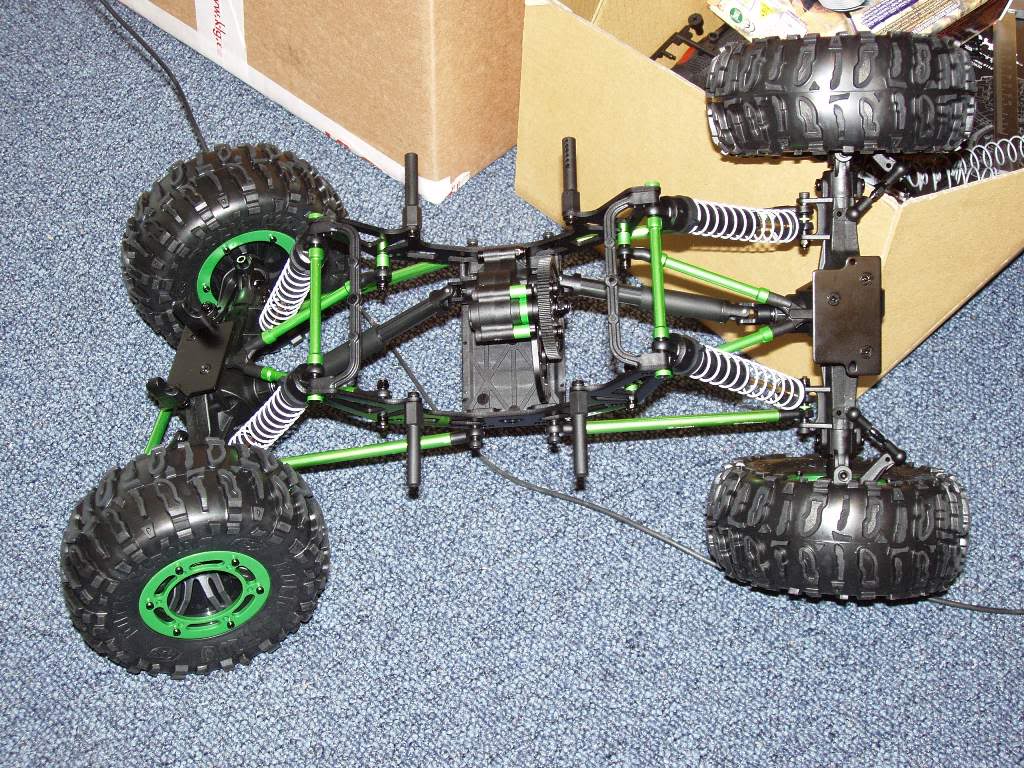
In 2005, a small company called Axial was founded in sunny California, and it launched the first commercially produced rock crawler with 2.2″ wheels, the AX10 Scorpion. The 2.2 class crawler became the standard class for rock crawling, which, by the way, was also driven in Estonia, and still is today.
The author of this blog post was also a happy AX10 owner. In the photo, the freshly assembled machine
From rock crawler to scale crawler
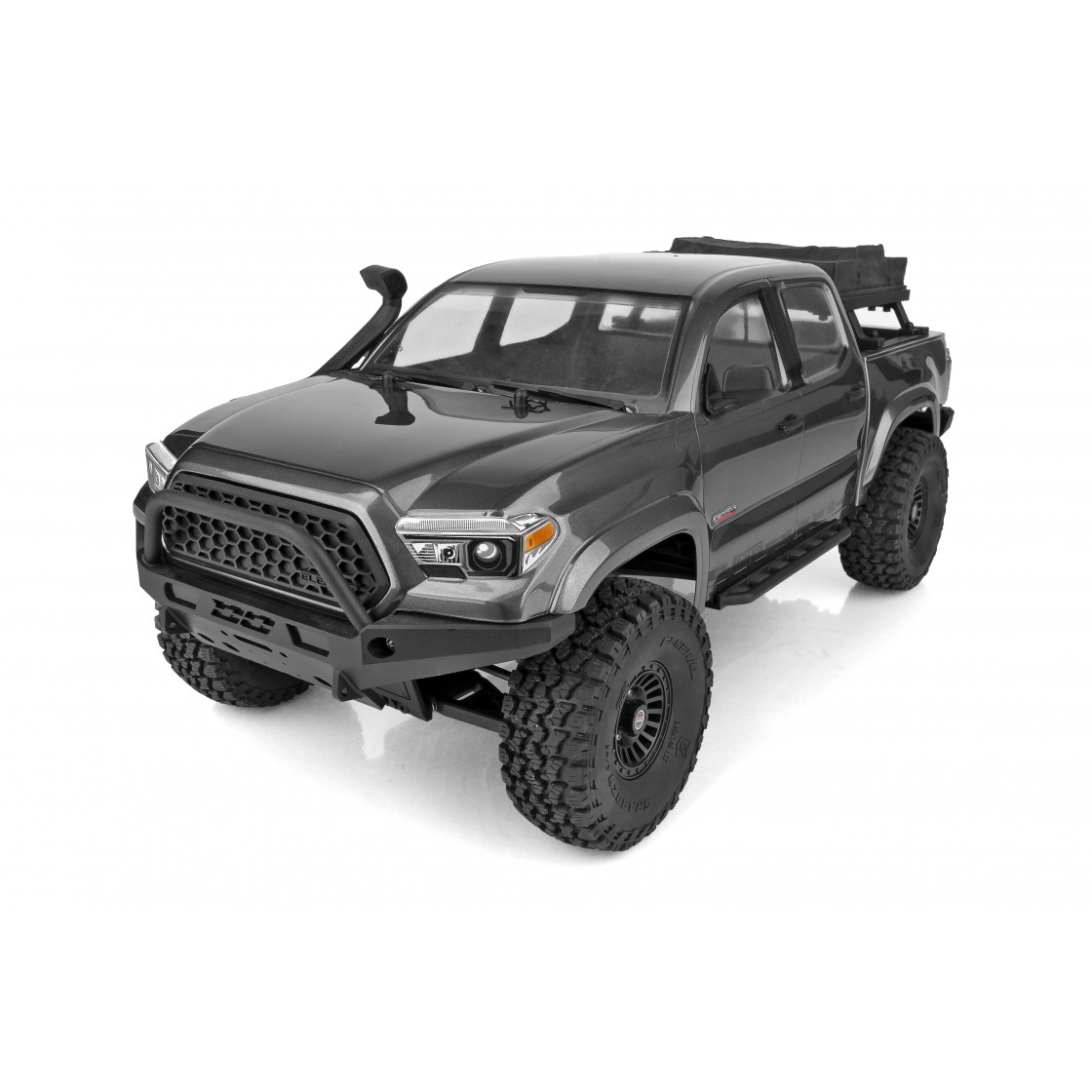
So at first, the crawler was more of a model built for serious rock climbing, with extremely good articulation, and it didn’t really resemble the real off-road vehicles we picture today when we hear the word crawler. Slow crawling had enough fans, more and more models started to appear, and models with smaller 1.9″ wheels came onto the market. These replicated real off-road vehicles and came to be called scale crawlers. Their climbing ability was (and still is) weaker, but the goal was rather a realistic look combined with good off-road capability. The scale crawler has become a real hit, many people like it, and many prefer this type of model to all others. Today the scale crawler has become a synonym for crawler, and when the word is mentioned, something like this is more likely to come to mind:
Why are crawlers so popular?
So why are crawlers so popular? Perhaps because you can rebuild them quite a lot to your own liking, add various scale accessories and details, and make them really personal. On top of that, these models don’t need any special track and they don’t run away from you. All you need is some interesting natural terrain, which most of us can find somewhere nearby.
Crawler manufacturers
As mentioned, crawlers are made by many different model manufacturers today. Claypit offers crawlers from brands such as Traxxas, Axial, ElementRC (Associated), FTX, RC4WD and Tamiya. The Traxxas TRX4 is a model with a large number of variations that works very well. RC4WD makes extremely scale-realistic chassis and bodies. Axial has a long history, but was acquired by the large hobby corporation Horizon Hobby, which knocked them slightly off course. FTX is the own brand of the large UK model wholesaler CML Distribution and mainly targets the more affordable price segment, but recently it has also been making a few things for the more expensive segment. Tamiya is a completely different kind of product, appealing mainly to Tamiya fans, being slightly different in construction and less capable, but with detailed bodies. Associated Electrics’ crawler brand ElementRC has made a very strong mark in the crawler world.
ElementRC Ecto and Zuul
The ElementRC Enduro has perhaps received a little less attention in Estonia than this family of models deserves. That said, there are quite a few of them driving around here, and in addition to good scale crawlers, ElementRC offers some models that are much more capable on rocks than other similar ones. If you’re looking for something that looks cool but climbs better than a scale crawler usually does, Element has a solution ready for you, you could even say two solutions – the Ecto and the Zuul!
These climbers share a chassis, but wear different bodies and roll on different wheels. The Ecto has larger diameter tyres and the Zuul slightly smaller ones. In this respect, the Zuul is a little weaker at climbing, but the Ecto is considered the best of its kind. Fortunately, both models have beadlock wheels, so fitting larger tyres onto the car’s existing wheels is easy if you ever want to. Both models use a narrower body reminiscent of a classic pickup truck, which leaves the wheels room to move freely. Aren’t they cool?


To add some moving pictures, here at the end is a YouTube video with both models happily driving together.
