


Maintenance & Tips
RC car maintenance for beginners – how and how often to maintain your model?
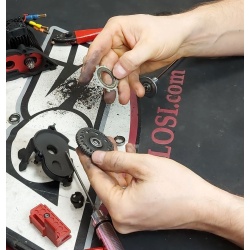
This time we’re writing again about an important topic, or even a group of topics, that should interest a beginner RC car owner. That is RC car maintenance and the topics related to it. The article looks for answers to questions such as:
- Does a model need maintenance, and if so, how and how often?
- Is it OK to repair a model yourself and take it apart?
- Can you drive an RC car in the wet, in water, in snow?
These are all questions we come across practically every day. At first glance, it might seem strange how RC models and water fit into this topic, but we promise there is a very direct connection. Read on and you’ll find out.ga päev. Esmapilgul võib tunduda, et kuidas sobitub siia teemasse RC mudel ja vesi, kuid lubame, et siin on vägagi otsene seos. Loe edasi ja saad teada.
How often does an RC car need maintenance?
Whether you’re just planning to buy your first model or have just become the owner of one, you need to bear in mind that an RC car is not a perpetual motion machine that only offers driving fun. Such a model is a relatively complex mechatronic device that also needs care between drives. Since models are mostly designed for outdoor use, they come into contact with everything found outside – dust, mud, water, small stones and other soil particles. How often a model needs maintenance depends directly on the driving environment and whether it is wet or dry. Models generally prefer to be driven in dry conditions, as dust doesn’t stick to the model in such large amounts and generally doesn’t get into the model’s vital parts very easily either. The vital parts are all the moving parts and the ball bearings, differentials and shocks within them.
Some manufacturers (for example Arrma) also give maintenance intervals for the model’s parts in the user manual. The interval is usually measured in runs, with one run being one battery cycle. It’s definitely sensible to follow this advice, but not every model comes with such a guide. In that case, the model’s owner should assess the condition of the model themselves and carry out either partial or full maintenance accordingly.
Is it OK to repair a model yourself and take it apart?
Assessing whether a model needs maintenance is largely a matter of feel and comes with experience. Which brings us to the second important question: “Is it OK to repair a model yourself and take it apart?” You can probably already guess the answer? Yes, you can repair and maintain a model yourself, and taking the model apart is an absolutely necessary and permitted part of the process. Without taking the model apart to some extent, it’s not even possible to carry out proper maintenance, as you wouldn’t have access to the part that needs it.
Can you clean an RC car with a pressure washer?
We are often asked whether washing a model with a pressure washer or simply under the shower is sufficient maintenance. Washing the whole model with a pressure washer is definitely not something we would recommend, for several reasons. The first and very important reason is that although the model may look nice and clean after pressure washing, it actually isn’t. A pressure washer is excellent at washing mud and dust into all the places where it should never get, such as ball bearings, all kinds of gaps, hinge pin sockets and so on. The end result is usually a car that looks clean but doesn’t want to move very well any more. The second important reason is the electronics on the model. You know the famous saying: “Water and electricity don’t mix”? Although many RC car boxes say the model has waterproof electronics, or at least some waterproof electronic components, it’s still worth using common sense and avoiding contact between the electronic components and water. An electric motor runs without problems even fully submerged in water, but that doesn’t mean the motor is watertight. Problems arise when the motor’s iron parts start to rust because of the water. The motor’s stator, ball bearings and shaft are made of iron. Water and the rust it causes have a destructive effect on ball bearings.
The model’s chassis components can be washed with water, but this requires taking the model apart first and removing all the electronics and ball bearings. The model should be stripped down into modules where every little gap is accessible – only then is washing effective enough to really get the model’s parts clean.
Dust and compressed air
Often, cleaning dust off the model is actually unwise, as dust generally doesn’t get into ball bearings and other vital parts too easily (the exception here may be driving on a track or in a place with very fine dust). In that case, it’s more sensible to leave the model uncleaned after driving, as superficial cleaning can push dust into places where it shouldn’t get.
A good option for cleaning a model is compressed air. If you have a compressor, you can easily get your model cleaner with it. However, take care not to aim the air jet directly at the bearings, as this again creates a chance that the dust and other particles collected on the bearing will be pushed past the bearing shield into the bearing.
How do you know your model needs maintenance?
But how can you tell that a model needs maintenance? Leaving aside changing the silicone oil inside the shocks and differentials for now, and focusing purely on the condition of the chassis, the assessment is actually quite simple. You need to make sure the drivetrain moves freely, without resistance and without unusual noises (squeaks etc.). Since the motor in an electric model has relatively high rolling resistance, you can disconnect the motor from the drivetrain. By simply rolling the model on a table, it’s easy to tell whether it rolls freely or its movement is restricted. If you hear grinding, crunching or whining while rolling, you probably need to check all the wheel bearings first. Ball bearings are a wear part on a model. Dust, mud and water can get into them, which causes the bearing to deteriorate. Bearings also simply wear out over time and can break. Wheel bearings, as well as all other bearings in the drivetrain, are an extremely important part of the components to check during maintenance, as the whole model actually rolls on them. If you find a bearing that doesn’t roll properly (grinds, crunches or is completely stuck), it needs to be replaced with a new one. Most bearings can be taken apart and serviced – washed clean, re-greased/re-oiled and reassembled. This can be done if the bearing isn’t already too damaged. It’s worth servicing bearings as part of routine maintenance to ensure they last as long as possible.
Checks before and after driving
It’s sensible to do a simple check of the model before and after every run. It’s largely a visual check – make sure all the screws are fully tightened, there are no foreign objects stuck to the model (small stones etc.), the car rolls freely and there are no noises that shouldn’t be there. Also check that all the driven wheels work and that the wheels don’t have unusually large play. A wobbly wheel usually means that the wheel nut isn’t properly tightened, or that the wheel bearing or bearings are broken or about to break.
Main gearing and motor bearings
You should check the model’s main gearing fairly often, especially if it uses a slipper clutch and a plastic spur gear. During the check, the inside of the gear housing should be cleaned. At the same time, check the motor bearings, especially the front bearing (on the pinion side of the motor). If the motor shaft has sideways play, the motor bearing must be replaced immediately, because a broken bearing will also damage the rotor, which in turn practically means having to buy a new motor.
Can you drive an RC car in the wet, in water and in snow?
Coming now to the third question, this is something that could even deserve a completely separate article, but we’ll still take a brief look at it here in the maintenance topic, because the two are very closely linked – they go hand in hand. The topic is, of course, driving in wet conditions. Is it OK to drive in water? Is driving in the snow in winter OK? What happens if I accidentally drove into the water at the beach? We get asked these questions quite often.
If the manufacturer claims the model’s electronics are waterproof or splash-proof, you can be fairly confident the claim is true. Usually it isn’t specified whether the electronic component can only withstand light splashes or whether the model can be fully submerged. There are actually several aspects to this. Even if, for example, the speed controller and motor are able to work underwater, you have to bear in mind that all kinds of cable connections (battery connector, motor connectors etc.) are practically impossible to make waterproof. When submerged, a short circuit will almost certainly occur between the battery’s + and – terminals. The model’s battery as such is never waterproof. So an RC model as a whole is never fully waterproof, and driving it in wet conditions must always end with thorough maintenance of the model. Even if the model has waterproof electronics, you have to bear in mind that moisture has a severe effect on the mechanical side, i.e. the chassis as a whole. Water damage occurs both during driving and later if the model is left without maintenance after driving in the wet. During driving, the greatest damage is usually caused by the fine dirt that comes with water, which is abrasive and wears out various parts of the model unusually quickly. After driving, the biggest problem is corrosion caused by moisture on various iron components – screws, driveshafts, ball bearings etc. The longer the model sits without maintenance after a wet run, the worse the situation gets. We have also had models brought to us that have ended up in seawater, either deliberately or by unfortunate accident. In one case, we had to conclude that restoring the model and repairing all the damage would cost considerably more than buying the same model new.
The point of all this is that driving in a wet environment can be great fun, but that fun is followed by hours of a slightly different kind of fun indoors at the table, maintaining the model.
Summary
To sum up! Keep a constant eye on the condition of your RC car and maintain it regularly as needed, and the fun will last longer.
Finally, here is a video on the ClayPitRC YouTube channel where you can see the main gearing maintenance of an Arrma Kraton 4×4 4S from start to finish.
