




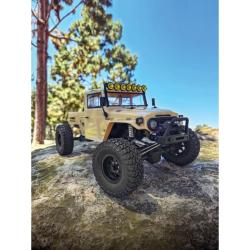
Today, crawler-type models are quite popular and the selection is massive. These types of models are available in every possible scale, ranging from tiny micro-sizes to massive 1/6 scale. Typically, they are 1/10 scale models, but micro-scales like 1/24 (Axial SCX24) and 1/18 (Traxxas TRX-4M) have gained massive traction as well.
The RC crawler actually doesn't have a very long history as a model type. How and when did this interesting model class catch the attention of manufacturers?
In its original form, a crawler was a model assembled from axles borrowed from other vehicles, built onto a custom-made chassis frame. Tamiya Clod Buster axles were widely used, where the motor was mounted directly onto the axle. The goal was to build a model that was as capable as possible for rock crawling and overcoming obstacles, while speed was completely secondary.
In 2005, a small company named Axial was founded in sunny California, releasing the first commercially produced rock crawler with 2.2" wheels—the AX10 Scorpion. The 2.2 class crawler became the standard for rock crawling, a discipline that was also raced in Estonia and is actually still going strong today.
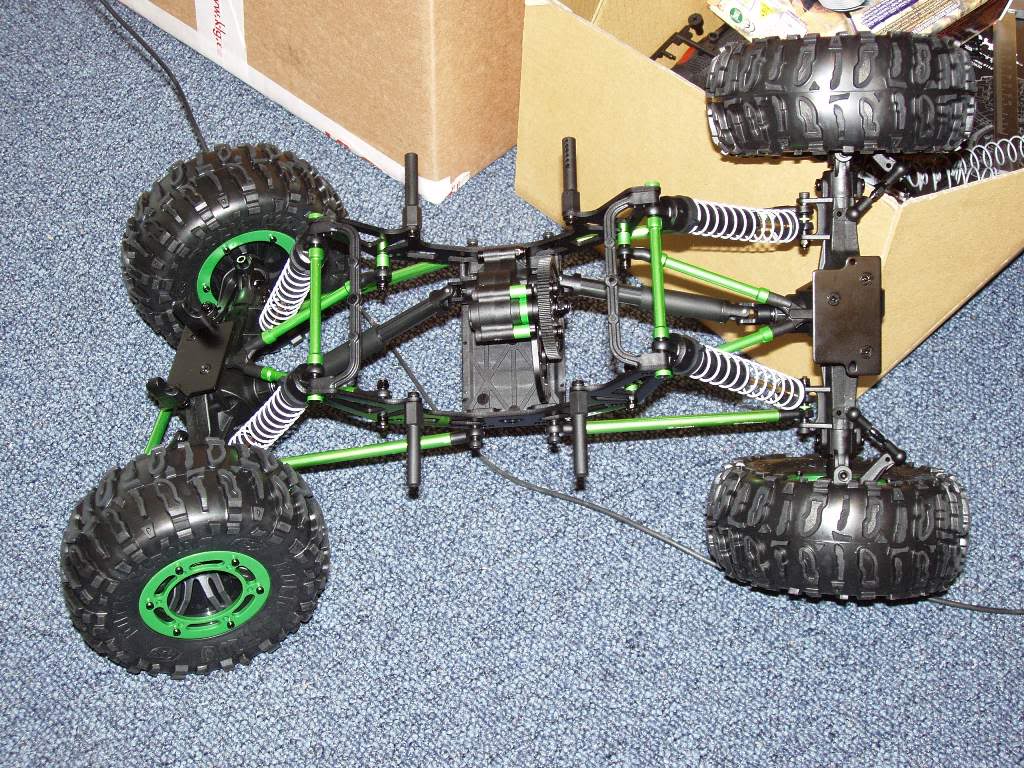
The author of this blog post was also a happy owner of an AX10. The image below shows the freshly assembled machine:
Therefore, in the beginning, a crawler was a model built strictly for serious rock crawling, featuring extreme articulation, and did not closely resemble real-life off-road trucks as we imagine them today. However, this slow-crawling movement found plenty of fans, and as more models emerged, vehicles with smaller 1.9-inch wheels entered the market. These resembled real Maasturid and became known as scale crawlers. Their climbing performance was (and still is) slightly inferior, but the focus was on a true-to-life appearance combined with good off-road capability. The scale crawler became a massive hit, and today it has become synonymous with the word "crawler". When people mention it now, they usually picture something like this:
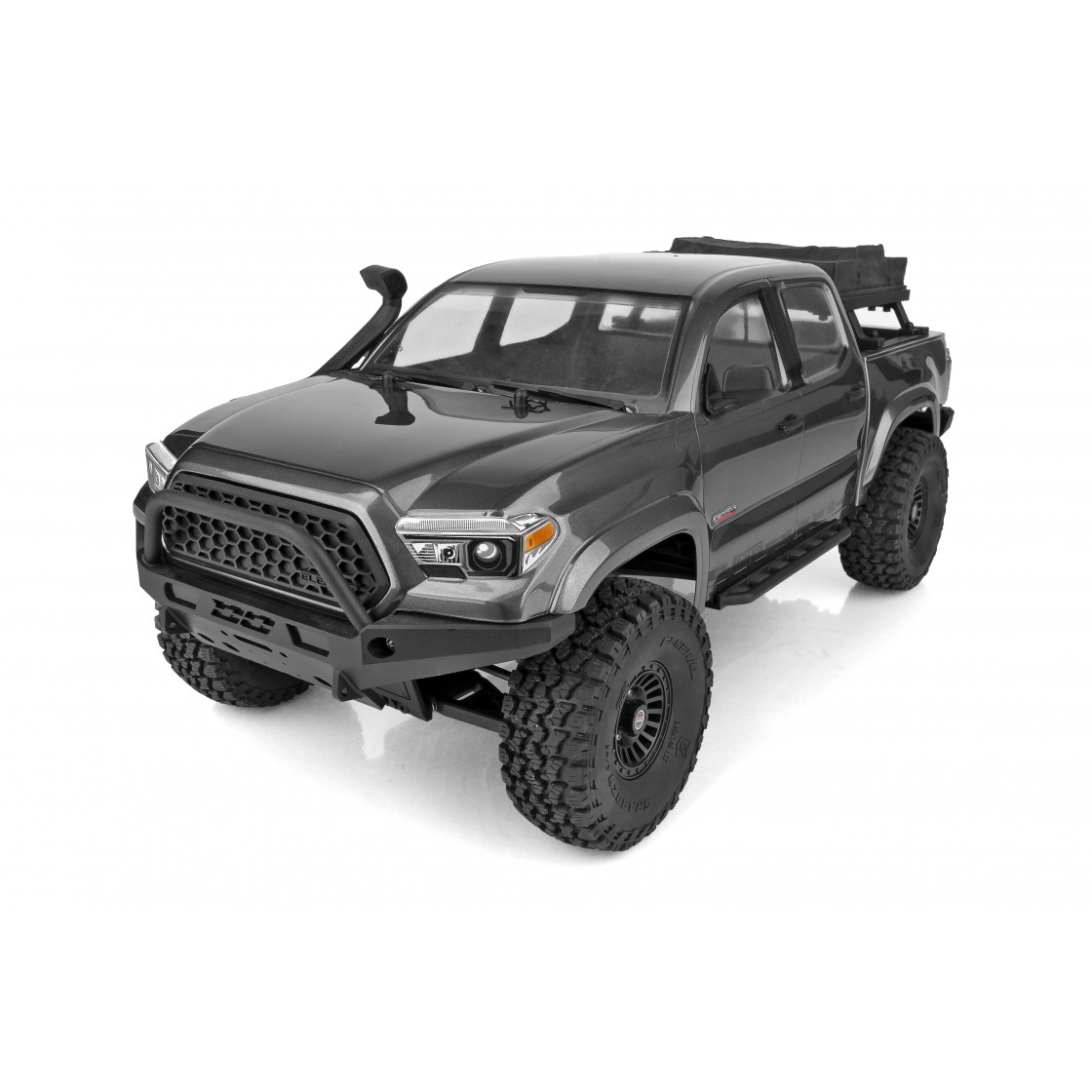
Why are crawlers still so popular? Perhaps because they offer endless possibilities for custom modifications, allowing you to add scale accessories, realistic details, and make them truly personal. Additionally, these models do not require a special race track and won't drive away from you. All you need is an interesting natural terrain, which can easily be found nearby by almost anyone.
As mentioned, crawlers are manufactured by many different brands today. ClayPit offers crawlers from manufacturers like Traxxas, Axial, Element RC (by Team Associated), FTX, RC4WD, and Tamiya. The Traxxas TRX-4 is a highly versatile platform with numerous variations that works exceptionally well. RC4WD produces ultra-realistic scale chassis and bodies, while Axial has a long heritage but was acquired by the large hobby corporation Horizon Hobby, which shifted their focus slightly. FTX is the house brand of the major UK distributor CML Distribution, targeting primarily the budget segment, though recently expanding into higher-tier models. Tamiya is a unique ecosystem that speaks mostly to dedicated Tamiya fans, featuring highly detailed bodies but slightly lower trail capability. Meanwhile, Team Associated has firmly established its presence in the crawler world with its specialized brand, Element RC.
The Element RC Enduro family has perhaps received slightly less spotlight in Estonia than it truly deserves. Nevertheless, quite a few of them are running out on the trails here, and alongside great scale capability, Element RC offers models that are significantly more capable on raw rocks than their competitors. If you are looking for something that looks awesome but climbs better than a standard scale crawler, Element has the perfect solution ready—in fact, two solutions: the Ecto and the Zuul!
These rigs share the exact same chassis layout but carry different bodies and roll on different tire packages. The Ecto features larger diameter tires, while the Zuul uses slightly smaller ones. The Zuul is therefore slightly less capable in pure rock crawling, but the Ecto is widely considered one of the absolute best performers out-of-the-box. Luckily, both models come equipped with authentic beadlock wheels, making it easy to swap onto larger tires down the line if desired. Both trucks utilize a narrower body style reminiscent of classic utility flatbed pickups, leaving ample clearance for the wheels to flex freely. Aren't they incredibly cool?


To see them in motion, we have added a YouTube video at the end, showcasing both models running happily together on the trail: